
F is for Fear
A short list of things I am afraid of (in no particular order):
- Stair steps
- The dark
- Car accidents
- Scorpions
- Heights
- Under the bed
- Being abandoned
- Success
- Ridicule
- Half closed doors
- Conflict
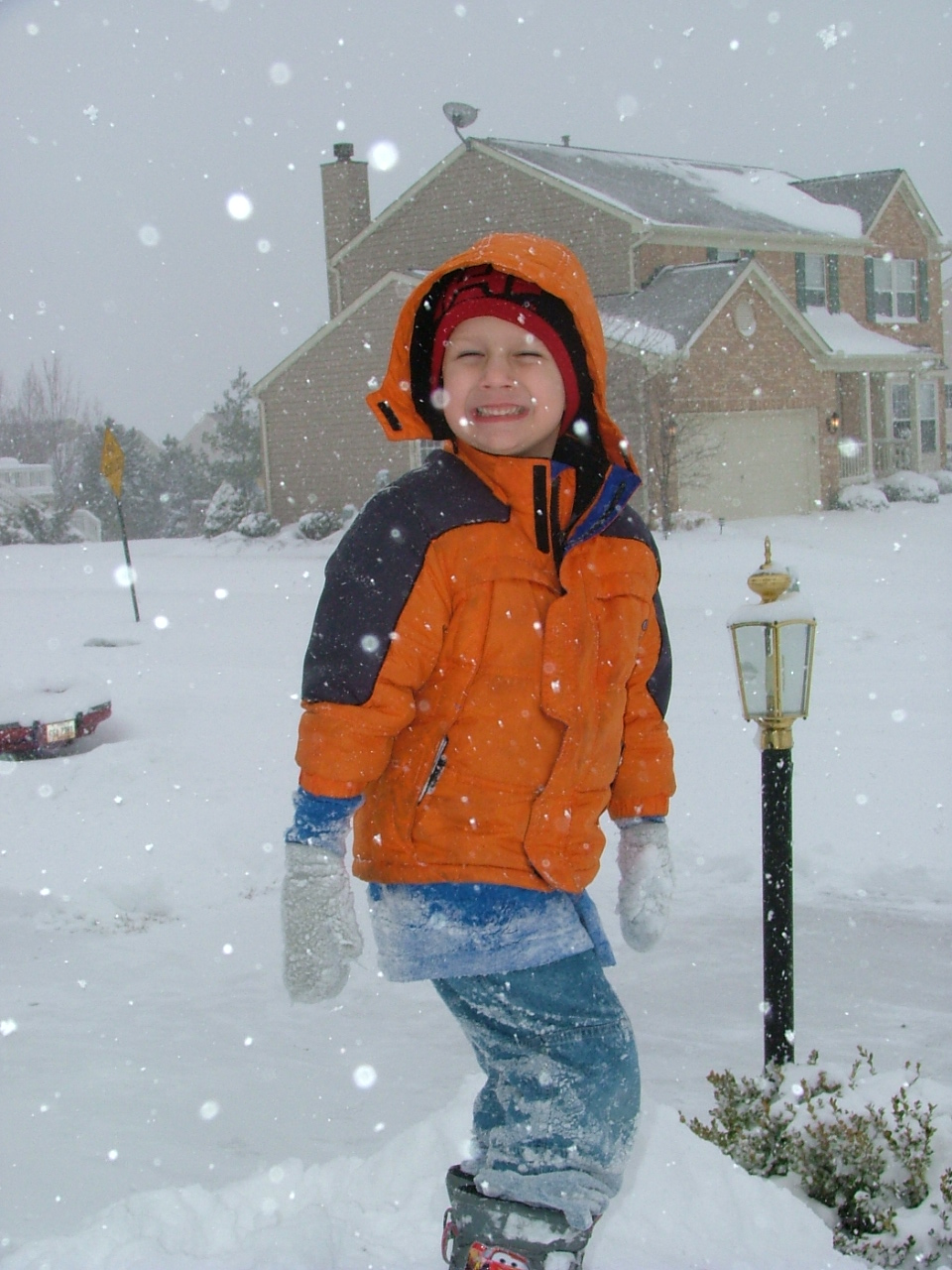
- Ice and snow
- Guilt
- Pain
- Anesthesia
- Fame
- Fire
- Cancer
- Alzheimers
- Hell
- Forgetting
- Remembering
Reading this list, you’d think I lived in a fireproof Ranch with no doors and extra fire extinguishers and high powered lamps.
But other than few extreme phobias, I live a relatively sedate life–even without the help of pharmaceuticals.
Some fears are irrational and some can be traced back to a real events. I had a scorpion infestation in my house in Atlanta. Therefore, I don’t care to cohabitate again.
I have been in seven car accidents–many on ice and snow (but never while I was driving. I have always been the passenger.)
I have been known to drug myself with Tylenol PM on New Year’s Day so my husband can drive us home from Michigan without my corresponding anxiety attack.
I didn’t used to be afraid of heights until I had children. But I don’t know why.
The funny thing about fear is that it can’t be rationalized away. I know I shouldn’t be afraid of silly things like half closed doors or guilt trips. But as I walk near the railing, where I can see down over the edge, my knees get weak and I can’t step closer.
Fear results in worry. I used to live in a Ranch house (complete with scorpions) but since moving into a two story house (with stairs), I go to bed every night mentally rehearsing how to get my family out of the house if it caught fire. Today is the 6th anniversary since our move to Ohio, which means I have worried about this for nearly six years now–every night.
But at least there are no scorpions in Ohio.
What is the craziest thing you are afraid of?
Tomorrow’s post is on Gifts.
E is for Edit
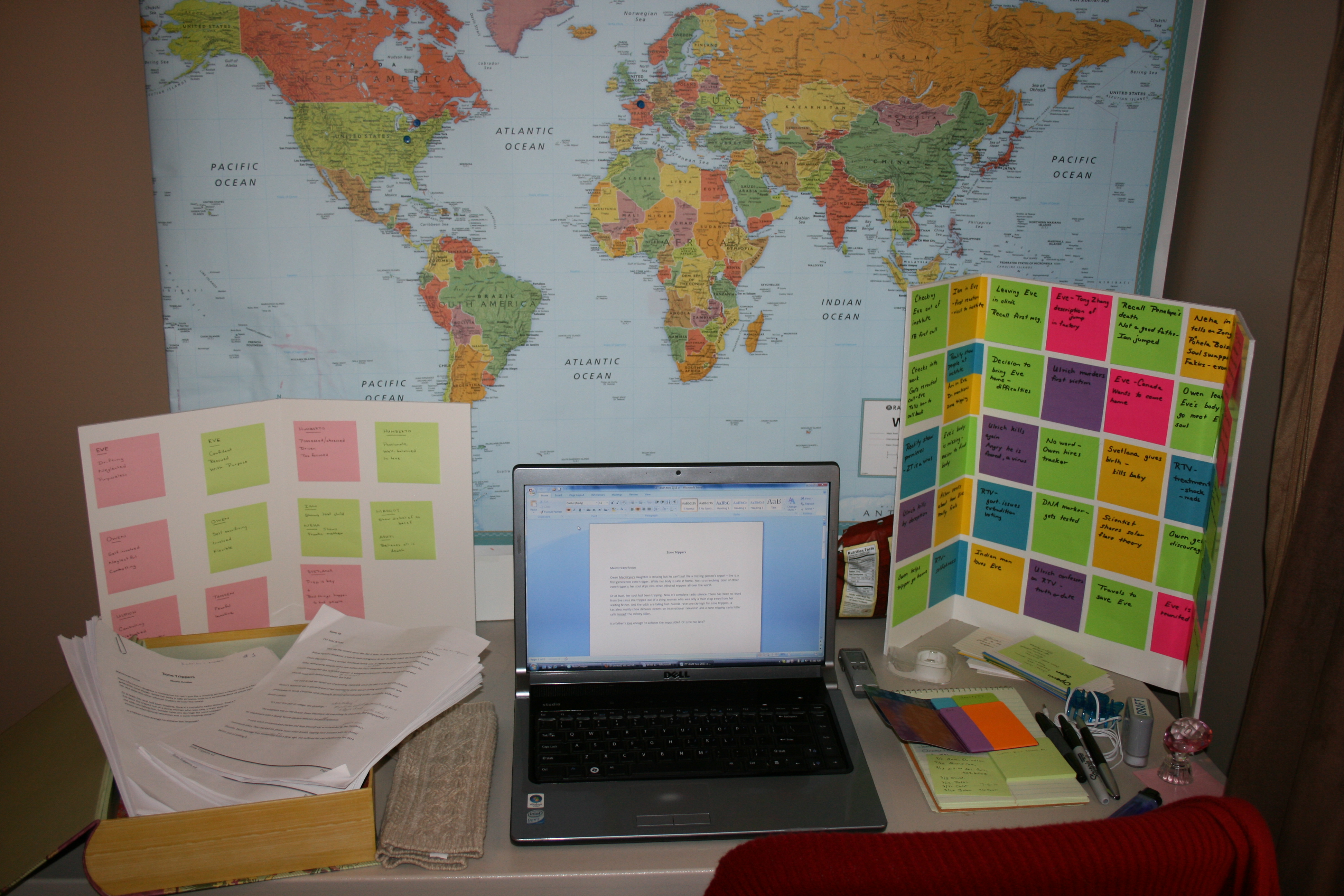 I have written every one of my first drafts as part of NaNoWriMo (National Novel Writing Month.) At the end of November, I have a perfectly formatted crappy first draft. I spend the rest of the year editing extensively. So it is with great authority that I share with you my editing process.
Editing Checklist
Beginning
Does the inciting incident happen right away?
Are their information dumps? Or are details feathered through as necessary?
Does the first chapter/scene include a mini conflict?
Is there any back story in the first 20-30 pages? If so, remove it.
Mechanics
Use a wavy line to mark awkward sections
Star sections I like (ego boost!)
At the end of the scene, write a single sentence that defines the scene (I add these sentences to an Excel file to use in the synopsis)
Grammar
Run spell check and grammar check (duh!)
Search for all –ly words—adverbs. Try to eliminate them.
Remove prepositional phrases.
Search and remove the words: very, nearly, extremely, that
Try to change your similes to metaphors (which are stronger)
Delete italics, all caps and exclamation points. No more than five are allowed in the whole book!
Characters
Does each character (even secondary characters) have a story arc? Do they want something? Do they strive for it? Do they get it or not?
Are all your characters important? And memorable?
Does your protagonist act? Things can’t just happen to him/her. They must act.
Do not state an emotion. Show it, do not tell.
Do both your heroes and villains have good traits and bad traits? Do you sympathize with them?
Do your main characters have both an interior conflict and an exterior conflict?
What motivates your bad guys? Are they multidimensional?
Is your protagonist changed at the end of the story? How so?
Setting
Is the setting well established? Could the story happen in a different time and place?
Is each scene told in the right place?
Address time of day, season, weather, place, country, etc.
Are all the senses addressed: smell, sight, touch, sound, taste?
Continuity
 Do a search for all your main character names. Make sure they are all spelled the same way (including nicknames)
Check your time line and make sure all your scenes fall in the correct time line
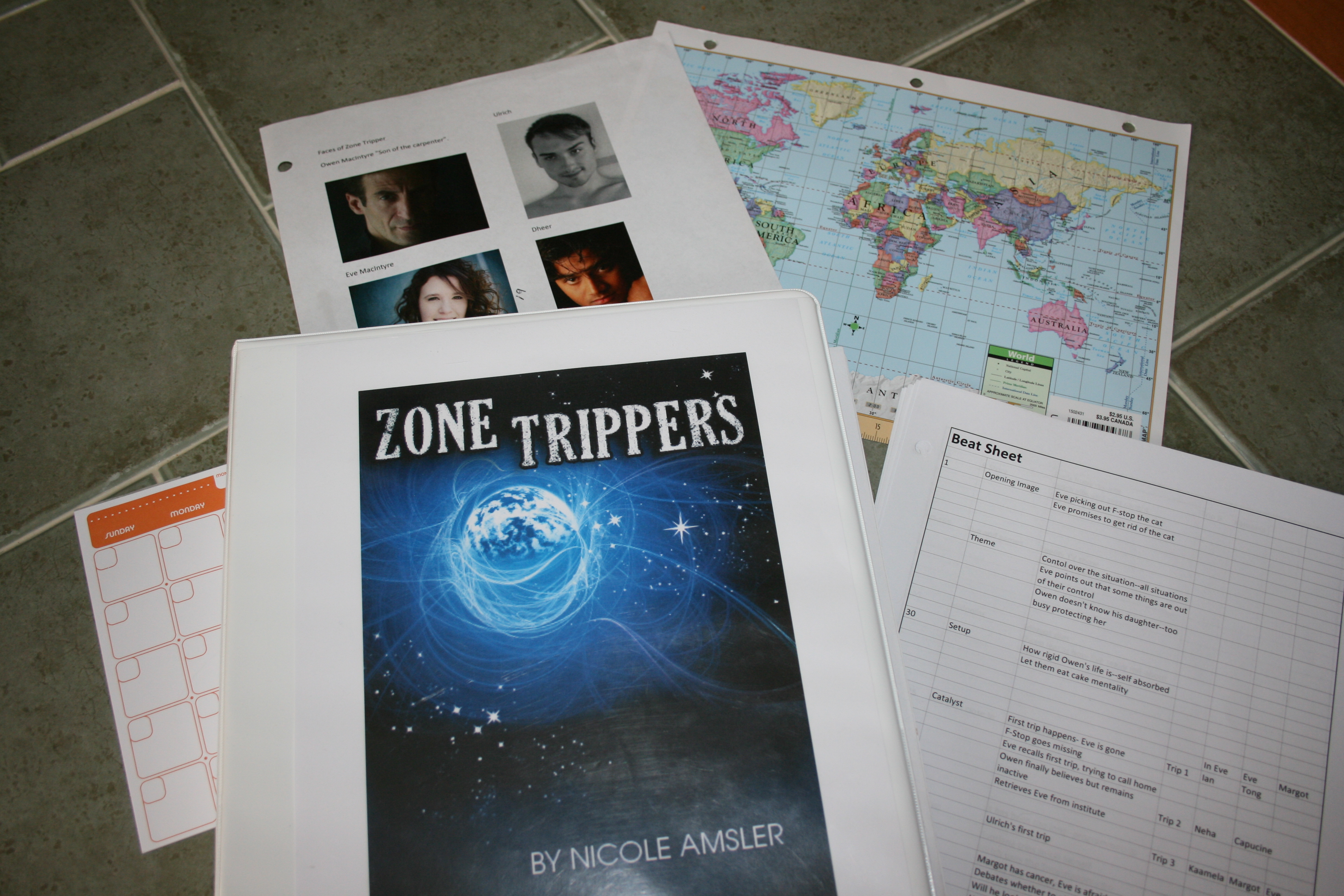
Double check your details against your master list (shown above.) This is a master file with character sheets, calendars, outline, subplots, discoveries, etc.
Pacing
On each page, check your tension. Does someone want something? Is there tension? If so, mark a T at the bottom of each page.
Make your fast paced scenes feature shorter sentences.
Does every scene advance the plot?
Is the ending in scene? It can’t be summarized.
Language
Remove all overused words.
On each page, is their one strong visual? If so, mark a V at the bottom of each page.
Highlight each cliché and rewrite.
Change every vague word to a concrete detail.
Voice
Can you tell which character is talking without attribution?
Use vocabulary, catch phrases, cultural aspects, educational level, worldview, frame of reference, dialect, attitude and tone to capture voice.
Let your characters make unique comparisons.
Read every piece of dialogue out loud. Better yet, have someone read your dialogue to you.
Does the dialogue earn its place? It should not reveal back story. Characters can not tell each other something they already know.
Avoid monologue—rarely more than three lines.
Avoid any attribute other than said or asked.
Finishing Touches
Double check your first and last sentences on each chapter? Do they have an amazing hook? Do they end well—leaving the reader wanting more?
Is the symbolism and motifs well developed?
Ending
Do no moralize or preach.
Avoid wrapping everything up into a neat bow. Failure had to be an option.
The closing image or scene should echo the first scene/image.
I revisit this checklist several times during the editing process. My current problem is learning how to STOP revising.
What are you editing tips?
Tomorrow’s post is about Fear.
D is for Doubt
If belief is the opposite of doubt, then I find belief to be a lot like math. In theory, I understand some of the basic tenants. I have seen some experts put it into practice. And if I strive very hard, I can graze my fingers along its edge before it vanishes again.
I wish belief was easy for me but it is not.
I grew up in a Christian home, attended a Christian college, populated my social calendar with religious groups and events and regularly attended church for almost all of my 39 years.
Yet, doubt is my default.
I’ve never been comfortable declaring myself a Christian because 1.) some of the worst people I know are Christians and 2.) I was never very good at it. For me, it is the equivalent of claiming to be a mathematician.
At the moment, the best I can do is declare myself as having one foot in a bucket of agnosticism and one foot in an ocean of hopeful thinking.
The “Good” News
I have a hard time imagining a God who created a world full of diversity and then created a prescribed six step program that swings open the gates Heaven. But in His creativity, He forgot to give the instructions to the bulk of the world.
Rachel Held Evans’s book Evolving in Monkey Town says this, “If salvation is available only to Christians, then the gospel isn’t good news at all. For most of the human race, it is terrible news.”
For years, I refused to read even one book that might contradict what I was taught. My faith was already that shaky. I still have a hard time reading them, feeling I have to balance the scales by reading an equal number of Zondervan books.
Two of my favorite middle ground books include Rachel Held Evans’s Evolving in Monkey Town and Jason Boyett’s O Me of Little Faith. Both are decidedly smarter than me and they offer wise rationales on why they doubt. Their excuses are more articulate and well-rounded than my excuse of “I just don’t get it.”
Letting Go
Many of the things I was raised to believe, ring hollow for me now. I see contradictions everywhere. I can’t buy the Bible’s teachings lock, stock and barrel. I have a hard time believing Jesus has a political affiliation, let alone a country preference. And for years, I have faithfully carried out all the steps to grow your faith–attend church, read the Bible, practice quiet time, join a Bible study, serve in the community and so on.
But right now, I am tired. I have searched. I have performed my part–diligently seeking. But I still have not found.
Don’t Ask, Don’t Tell
It feels inappropriate to express doubt for a multitude of reasons.
- I might infect someone who is secure in their beliefs.
- I will worry my loved ones, who are now convinced I am headed to hell.
- It invites people to convert me or to help me see the light.
- It doesn’t solve anything.
There are a hundred reasons to NOT ask questions. There are a thousand reasons to nod along with masses, pretending that I am moved by the worship music and that the Bible verses light up on the page.
I find myself in a more pressing predicament with my two children (age 7 and 9). Both of them are prayer warriors, steadfast believers and generous souls. I don’t want to do anything to jeopardize their growing faith.
Since doubt is my default, I don’t want to pollute them with my unbelief. But when they ask hard faith questions, am I supposed to lie? Am I suppose to recite what I was taught? Or do I share honestly or with filters?
I urge you to comment politely. Are you full of belief–or doubt? Are you good at math?
Tomorrow’s post is about Editing.
C is for Cry
At age 37, I had silicone implants put in.
Not in my breasts but in my tear ducts.
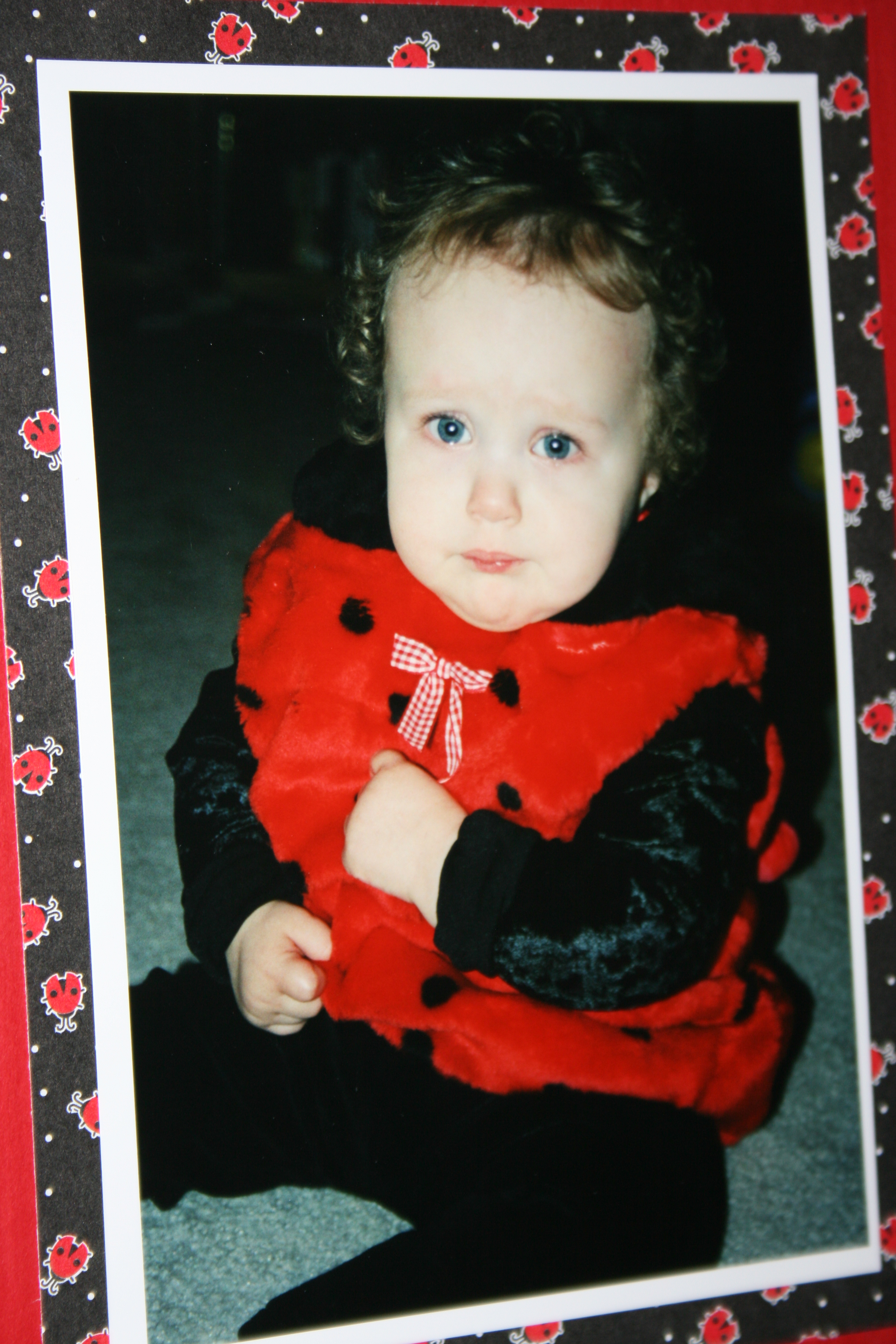 I have had an issue with crying my whole life. I had a violent military birth with a forceps delivery that left me with a black eye, lopsided nose and clogged tear ducts. There are no pretty baby pictures of me and when a prettier, blonde “Smith” baby was presented to my parents by the nursery staff, they were honest enough to request their actual, ugly baby.
During the crucial teen years, I had an evil step father who made it his goal to make everyone in the household cry. Therefore I made it my goal to not cry. Ever.
As a married adult, I can count on both hands the numbers of times I have cried. It is cause for great concern if my husband sees me crying–and like all husbands, he’d really rather not see me indulging in a sob fest.
And for me, the concept of indulging is key. Anger and tears are two emotions I don’t feel I can indulge in. And I hold a false, inappropriate disdain for those who can cry and benefit from it.
Apparently my lifelong practice of not crying has dried up my tear ducts. I have wore contact lenses since middle school. I am nearly blind without them but about two years ago, my eyes were irritated from the second the contact lens hit my eyeball.
After having silicone plugs put in my tear ducts and conducting some testing, it turns out I have defective tears. The average blink should coat your eye with tears that will last 13-15 seconds, before you need to blink again. My tears lasted less than 2 seconds.
I don’t know that my lack of crying actually sent my tears packing, but the result is a lifetime of wearing glasses. There is no brand of contact lens that will replace what can longer be generated.
Cry Little Children
But not crying isn’t a skill I want my children to inherit.
My children will indulge in a good cry. And it makes me happy. Just today, as Grandma and four cousins left for Michigan, Spencer shed some tears. He has a particularly sensitive heart and prefers to cry with Momma or Daddy in attendance. Delaney has sobbed over friendship slights, the death of pets and because her best plans went awry.
I have never encouraged them not to cry. I hope it is an outlet they are able to use, as needed. And perhaps some day my tears will come back. Until then, I will rock the implants and train a dry eye on my children–learning from their example.
What personal flaws do you have that you don’t want to pass along to your children?
Tomorrow’s post is about Doubt.
B is for Back Story
I do not understand what I do. For what I want to do I do not do, but what I hate I do. Romans 7:15
Back Story
I’m not one to typically quote Bible verses but I think this one is exceptionally true. I am obsessed with back story–both in stories and in life.
I appreciate movies and shows who create expansive universes and call on them to direct the action. I am especially impressed when the back story is a game changer but isn’t revealed until late in the story.
Some of my favorite examples:
In Buffy the Vampire Slayer (TV), it is revealed Angel has been watching Buffy for years prior their meeting. (Joss Whedon rocks at back story.)
In Final Cut (movie), one faulty memory is revealed–changing a man’s whole purpose and meaning in life.
In Memento (movie), the bad guy is not who we thought.
In Phantom by Susan Kay (book), we learn the real reason Erik is obsessed with Christine and how he came to know all his secrets.
In many of these cases, we thought we understood the character. We could predict how they could act. But as more of their back story was revealed, we learned more about their motives. They took new risks and changed directions, without contradicting our first impression of the character.
Excellent back story is an art form unto itself.
Personal Back Story
 Another reason I am obsessed with back story is because it is application in life. Or to be more accurate, I feel it should be applicable but I can’t figure it out.
If I understand another’s history, then I should be able to predict their actions with reasonable accuracy. But this is certainly a case where life is far stranger than fiction.
In my life, I have met a few people who exemplify evil. They suffered tragic pasts and as a result, they paid forward the evil they suffered. But I have also met loving, giving people–who have had equally tragic pasts. Why did one continue on a path of pain, while the other forged their own original trail?
But as the Bible verse implies, I can’t even predict my own behavior on a regular basis.
- I eat when I am angry. And I don’t always know why I am angry.
- I am self destructive in many unique ways.
- I act out of biases and prejudices that I don’t rationally believe.
- I don’t finish things–especially if it looks like it will be successful.
I have rather large holes in my past but even with inadequate information, I should be able to predict my own behavior. But often, I can’t.
In fiction, it is crucial to understand the character’s back story informs and influences his decisions. A deep dark secret can be revealed and further influence his trajectory but it can not contradict what we already know.
I am always on the look out for new books, shows and movies that demonstrate excellent back story. Do you have any to share?
Monday’s post will be titled Cry.
A is for Answers
I have been hesitant to commit to regular blogging because of one word.
Answers.
Since I have no handy capsules of educated advice to dispense, I feel unqualified to blog. I have no expertise on a singular topic. I don’t even have an opinion on several topics. I am woefully inadequate on the share answers and advice on the world’s problems.
And as an aspiring author, I often live in a world where I create more problems than I solve. In order to solve a particularly knotty plot problem, I can just modify my character’s background or their arsenal of solutions.
I have yet to succeed at solving the real life problems I have in my life and in the lives of others.
 Becoming a Tour Guide

I am not qualified to sit behind the information desk. But I can take you on the tour and smell the flowers with you.
I might not know the name of the cross street or the nearest landmark. But I am happy to marvel at the scenery with you. I forget the dates and times of the next show. But I’ll walk you there and we can talk along the way.
In truth, I am an expert at nothing. But I dabble in much.
I know very little. But I desire to learn much.
And I need advice more than I can give it.
But I can offer no answers. I barely understand the questions. I can only offer my view from my road, pointing out landmarks you might have seen. Or ones I suggest you avoid–speaking from personal experience.
Is it answers are you are looking for?
Then the information desk is over there. They know the answer to everything. But I am taking out a tour in just a few minutes. You are welcome to join us. The more the merrier.
Tomorrow: B is for Back Story