
Appeasing the Angel of Death
I am a worrier by nature and by intense decades of practice.
Each night I lay in bed worrying about a potential flood in the basement, a house fire caused by a clogged dryer vent, the abduction of my children from a stranger, and the death of my husband in a plane crash. I worry about bankruptcy, government collapse, the flu virus, a forgotten bill, and a new lump in my breast.
My philosophy on worrying:
If I worry about it, it is less likely to happen.
I sing myself to sleep with a litany of worries which I believe inoculates me from befalling their tragedy. The act of worrying is a preventative measure.
 Sacrificial Characters
I have never understood the idea of creating characters in a book you are writing and then going easy on them. In classes and critique groups, I often hear from writer’s who like their characters too much to apply the proper force of conflict. They don’t want to inflict damage on the character they love so much (and who often is based on them.)
I do not have this problem.
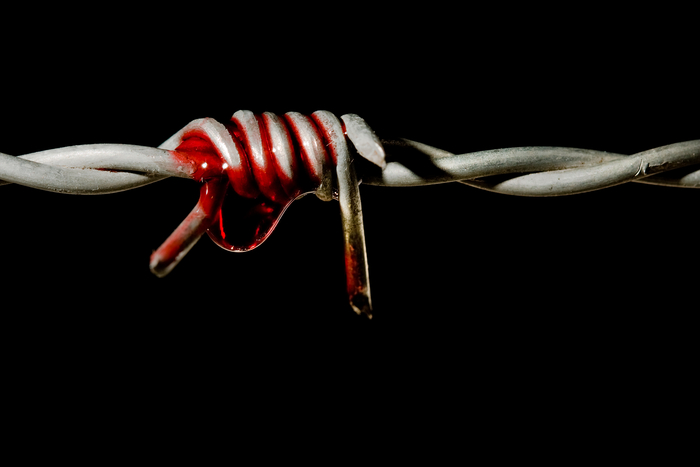
I torture my characters. Everything they love is forcibly removed. They lose their dreams, their hopes, their dignity, and their purpose. They are buffered by waves of pain, loss, and betrayal. No one is safe. Even secondary characters are mortally wounded.
I do try to write hopeful stories. In the end, they are alive. Battered and bruised, but newly wise and looking toward the future. But I don’t minimize their pain. They have scars from traversing through my stories.
I think the people who can’t torture characters believe they are tempting fate when they do. My philosophy on worrying takes me in the opposite direction.
By inflicting all my worst fears on my literary characters, I am offering them up as a substitute sacrifice. If I sufficiently torment my protagonist, perhaps the angel of death will pass over my house. Their sacrificial blood marks my doorway.
Burning Sugar
I have a slight obsession with making caramels. I love the burnt sugar smell, the rolling boil, the slam of vanilla scent. Of course, I enjoy eating them too but I usually make a batch and give away ¾ of them.
Today as I was stirring, I was plotting my new novel in my head. (I cook more frequently when I am writing. Particularly anything that has a lot of stirring or chopping.) As I browned the butter, making sure to not to scorch the delicate butter, I considered my protagonist, Aubrey.
She is one of those characters who can be very sweet but who were nearly ruined by too much drama, too much heat. She is much like my caramels.
You can feel the danger when you eat a good piece of caramel. Both the butter and the sugar were brought to the edge of ruin. They are degrees away from ruin. But because of their near devastation, they hold a whiff of redemption. They have experienced much and have been transformed because of it. What began as innocuous ingredients you often add to coffee have visited the flames of hell and came out as a new being, one with form and function.
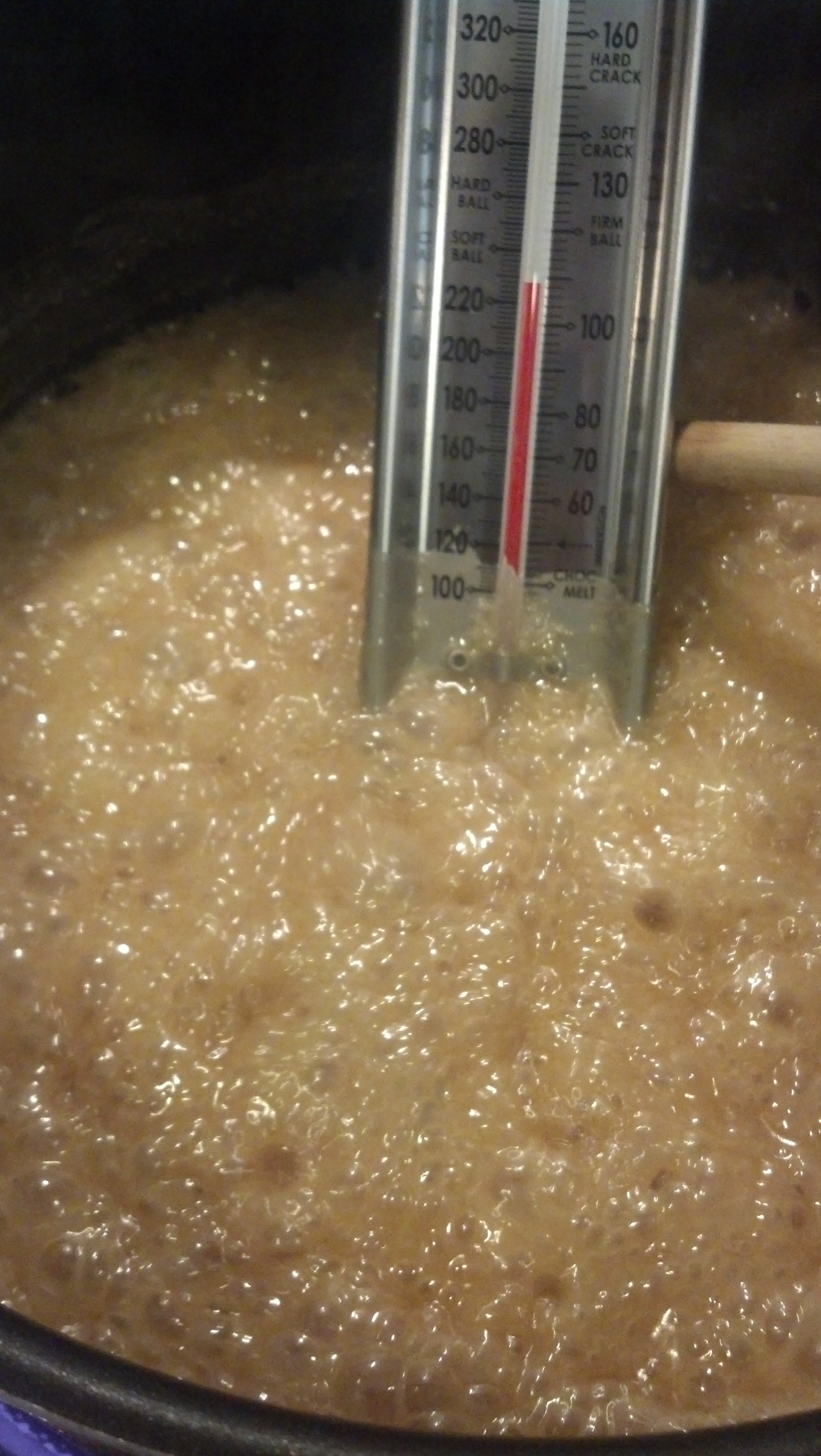
Our characters must do the same. They must feel the temperature rising, convinced the end is nigh. Their feet must be scorched and blistered from their travels. Pain is the main ingredient in transformation. The character suffering the burn of conflict can’t read the thermometer. She can’t even know it is there.
Neither can the reader. The reader must feel ruin is possible. A second too long on the heat and all will be lost. The reader must taste the danger.
As my caramels cool, I’ll be turning up the heat on Aubrey and watching the thermometer. I am the only one who can see it.
Browned Butter Caramels
Original recipe by Nicole Amsler
1 stick of unsalted butter
2 Tb of light corn syrup
1 cup of brown sugar, packed
1 cup of white sugar
2 cups of heavy whipping cream
1 tsp of vanilla extract
1 tsp of almond extract
Brown the butter in a heavy sauce pan until brown bits form on the bottom of the pan. Watch carefully. Add corn syrup, sugars and cream, alternating. Bring to a rolling boil and insert candy thermometer. Stir occasionally. Boil to 240° for a softer caramel and to 250° for a firmer caramel. Remove from heat and add extracts, stirring r thoroughly. Pour into molds or a low buttered pan. Cool and cut.
I often add a sprinkle of sea salt or a drizzle of chocolate to the finished pieces.
In Defense of Admiration
As children, we are told, you can be anything you want. Perhaps a ballerina, a fireman, a chef, a rock star, the president. We all want to make our mark. We all dream big.
But there is something to be said for the discipline of admiration.
It doesn’t pay well. It isn’t a lofty vocation. But it feeds a part of our soul which requires a steady diet of beauty, of transcendence, of a view outside ourselves.
I am an excellent admirer. Were it actually a career, I’d be an expert, a guru. Perhaps I’d teach classes on appreciation and the lost art of admiration.
Words as Worlds
I admire words. I devour well-written prose, savoring an imaginative analogy, sucking on the words until their flavor finally lessens. I reread passages, noting their complexity and subtext.
As a writer myself, I knew the author is speaking to me in code, writing simple words which multiply, divide, expand, and transform when processed through my own filters and sensibilities. My translation is not the same as yours. The story, written in multiple drafts, printed and distributed once, is decoded in a million multitudes. Even upon rereading, my new self translates in a new dialect.
The written word is to be admired. Words do not lose impact when distilled down to bytes and pixels or simple handwriting, nor is it improved by fancy fonts, billboard lighting, or a best seller status. Words simply are.
Truth and story and the immortality of words are sustenance to a hungry soul. A diet of words must be consumed to fill the brain with more than the small, single view point we are each limited by.
You only need to consider the word word. W-o-r-d. Four letters, missing only letter l to create world. Words build worlds, deconstruct worlds, define worlds, and expand worlds. Words are worlds.
Food as an Experience
Food is also to be admired. First, there is the study of textures: a tangy schmear of goat cheese on an unevenly toasted swath of bread, the crisp bite of an apple easing into a contrast of pliable cheddar, the firm dente of pine nuts mixed with soften pasta. Robust smells offer tantalizing promises—sizzling garlic mingling with the fresh scent of cooking celery, the snap of cream and burnt sugar transforming into caramel, the universal smell of baking bread.
Yet food is always about the taste. I understand why spice traders traversed the globe. If first introduced to such luxuries as cardamom, ginger, sea salt, and cayenne, I would chase after them too. Food can transform, be transformed. Balsamic vinegar, a good olive oil, a dash of basil slices, a drizzle of melted chocolate—these all elevate food to decadence.
Food is a requirement. We must eat to live. But the intake of food can be so much more. It can be communion, a peace offering, a promise. Just as writing speaks to the individual, so does food. I can’t taste food in the same way as you do. We each bring our unique taste buds and past experiences to the table.
But it is the appreciation of the food which makes a meal more than mere calories. I cook for my family and friends to fill their caloric requirements but also to fill their need for community and for the fusion of tastes, smells, and memories. I want to teach my children to notice the sun-warmed skin of a Roma tomato, the delicate layering of phyllo dough in baklava, and the specific tongue texture of chocolate.
The same noticing can be done in any of the art disciplines: music, theater, photography, art, fashion, conversation, and conflict.
Noticing and admiring removes nothing from the art, it can only enhance it. Admiring magnifies.
Lost Discipline
I admit I would love to be the writer of a great, universal novel rather than the admirer. I would love to feed a restaurant full of people, splitting my time between effusive praise and gentle sautéing. I can envision a deep curtsied bow to thunderous applause—for either a stirring performance or a soft lullaby. But these are internal urges: the need for recognition for self, rather than recognition for the art.
And perhaps, someday I will create something wonderful, something worth of admiration. But until then, I will admire. I will look outside myself. I will read the words set out for me by a lonely, determined writer. I will savor food prepared by the skilled and the student. I will listen to music that moves me, left, right, up, down, and inward. I will practice admiration and expect magnification—which seems a lot like the word magnificent.